Roman Blinds Buying Guide
Roman blinds pair the softness of curtains with the tidy convenience of a blind. Their horizontal folds look tailored in bedrooms, living rooms and dining areas. But fabric, lining, control system and mounting all change how a Roman blind looks and works day to day. This guide walks through each decision so you can order with confidence.
Chain control or cord lock?
The operating mechanism is one of the most important choices. Both systems raise and lower the blind, but they work differently.
Chain control
A continuous-loop chain turns a clutch mechanism that lifts and lowers the fabric.
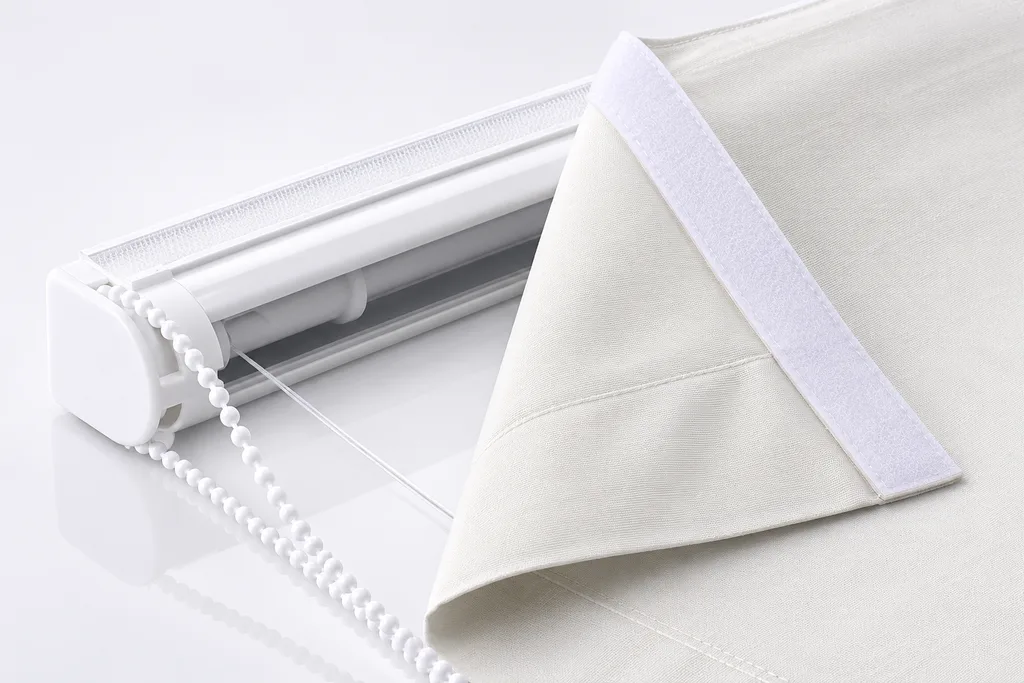
- Smooth, controlled movement as the clutch takes the weight of the fabric.
- Less effort on larger blinds and heavier fabrics.
- Easy to stop at any height to balance light and privacy.
- The chain stays in one place, so everyday use is straightforward.
Our recommendation: choose chain control for Roman blinds you will raise and lower often, especially larger blinds or heavier fabrics. For most customers who value ease of use, it is the preferred option.
Cord lock
A pull cord runs through a locking mechanism. Pull to raise the blind; release the lock to lower it.
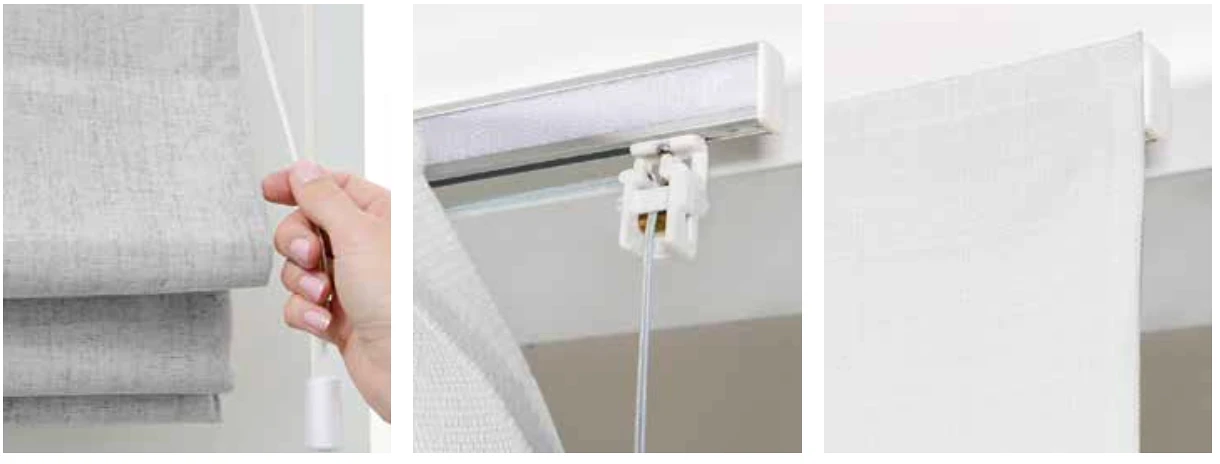
- Generally the more economical option.
- A traditional mechanism that suits smaller or lighter blinds.
- Works well where the blind stays in one position for much of the day.
Cord lock involves more hands-on handling, so it is better suited to blinds that are adjusted occasionally rather than several times a day.
Control options and pricing are shown in each product's configurator. Whichever system you choose, install the supplied child-safety device. See child safety below.
Lined or unlined?
Unlined Roman blinds can suit purely decorative uses, but lining adds practical benefits:
- Light control: lining reduces the light passing through the fabric, from gentle filtering to a much darker room, depending on the lining.
- Privacy: an extra layer reduces visibility through the blind, especially at night with lights on inside.
- Fabric protection: lining helps shield the face fabric from direct sun, which can fade and weaken textiles over time.
- Comfort: an extra layer can help reduce heat transfer through the window. Actual thermal performance depends on the fabric, lining, fit and the window itself.
- Fuller folds: lining adds body, helping folds look more defined.
- Even appearance: lining reduces see-through on lightweight or slightly sheer fabrics.
Light filtering or blockout lining?
Light filtering lining suits living and dining rooms where you want daylight with added privacy and fabric protection.
Blockout lining suits bedrooms, nurseries and media rooms where reducing light is the priority.
Lining choices differ between products, so check the options in each configurator before ordering.
Will Roman blinds block all light?
With blockout lining, Roman blinds can reduce light substantially, but they are not a sealed blackout system. Light can still enter around the edges, particularly when the blind is fitted inside the window recess.
If you want the darkest room practical, an outside-mounted blind that overlaps the window opening may reduce those gaps. Results depend on the installation, fabric and window design.
Where near-total darkness is essential, you may need an additional window treatment or a dedicated blackout system.
Why some fabrics fold more evenly than others
Roman blinds are made from textiles, and every fabric behaves a little differently when it folds.
Soft, flowing fabrics
Softer fabrics drape rather than hold a rigid shape. When raised, folds look more relaxed, with slight variation in depth and alignment. Many people choose this look on purpose for a casual interior.
Soft, lightweight fabrics, especially when used without lining, may need occasional gentle manual adjustment to help the folds sit neatly and stack evenly when raised. They may not settle into identical folds each time. Adjust the fabric gently with the blind stationary; do not tug on the fabric or force the mechanism.
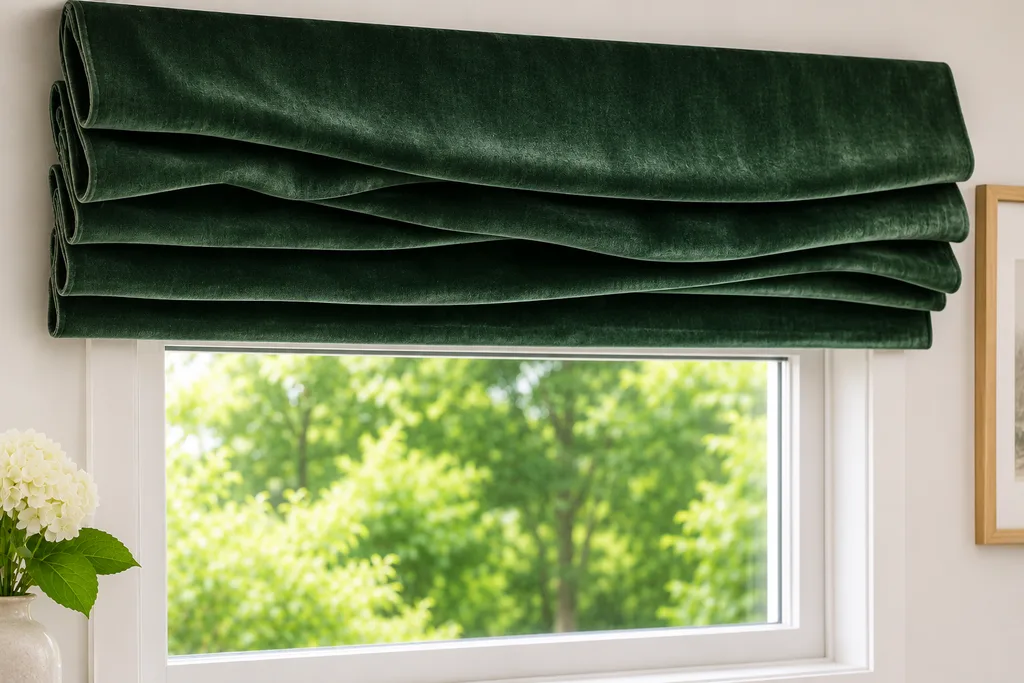
Natural waviness and rippling
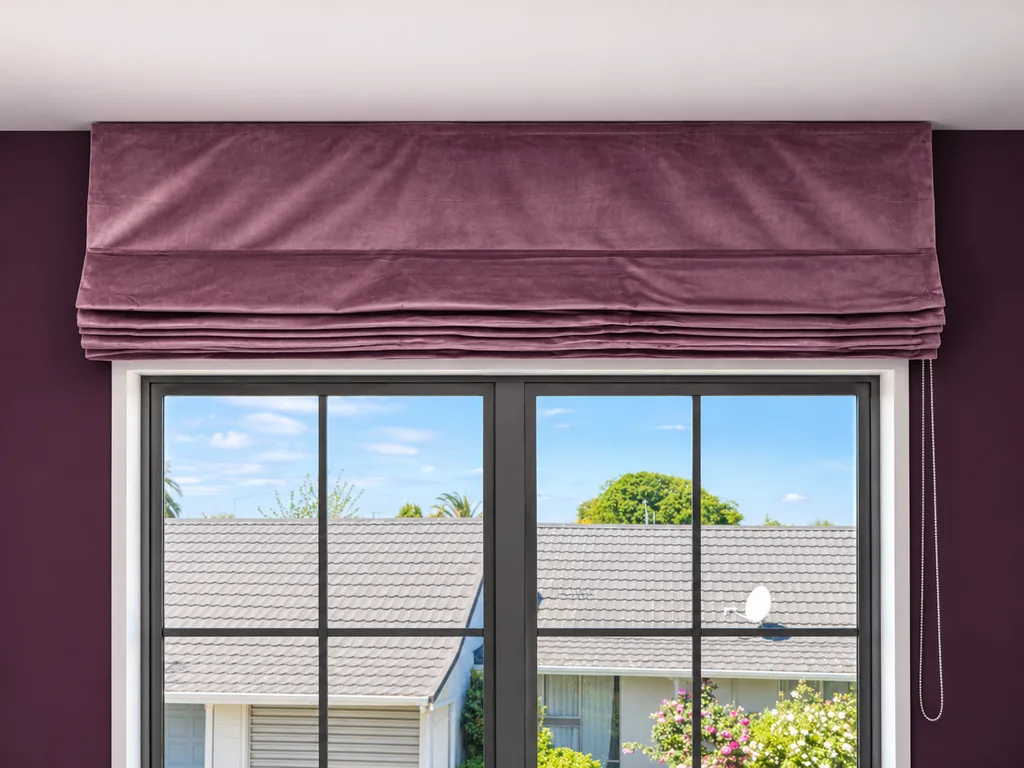
Soft, lightweight fabrics may also show some natural waviness, gentle rippling or a slightly relaxed surface when the blind is lowered, particularly without lining. These textiles do not hold the same flat, structured appearance as firmer fabrics. Slight variations can be an expected characteristic of the fabric rather than a manufacturing fault.
Lining can add body and help the fabric hang and fold more consistently, but it does not guarantee a perfectly flat surface or identical folds. If you prefer a crisp, uniform finish, consider a more structured fabric with suitable lining.
Firm, structured fabrics
Fabrics with more body generally form crisper folds and a neater stack. Weight alone does not decide the result, though. Weave, thickness, lining, construction and the spacing of the support rods all play a part.
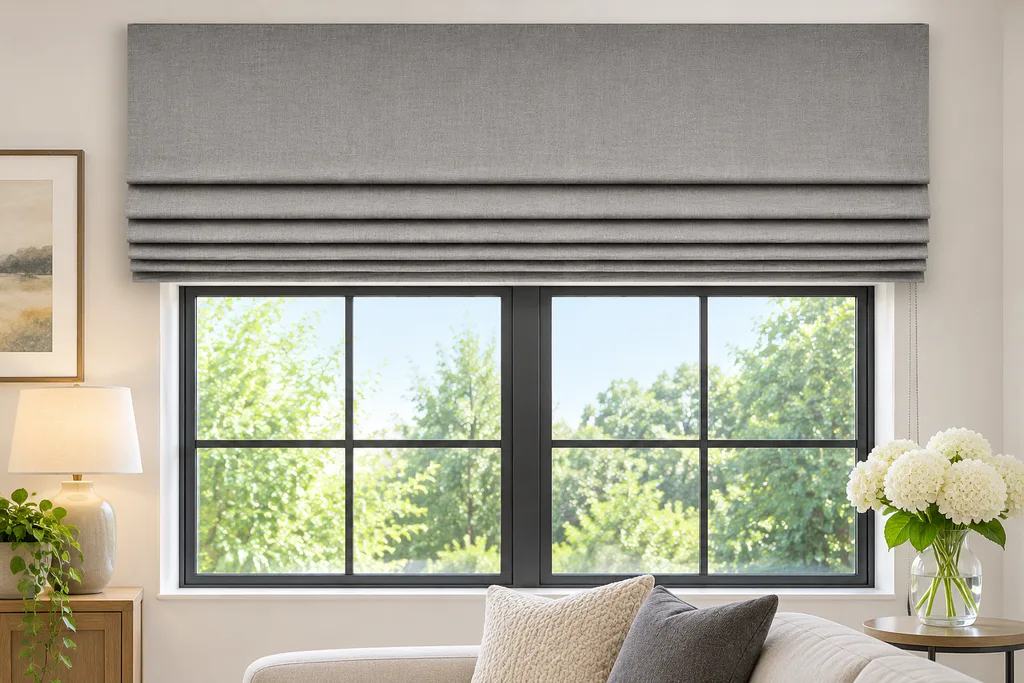
For a more structured fabric, explore Odyssey Roman blinds and Good Night Roman blinds. Compare samples to choose the texture and colour that suit your room.
What influences the finished look
- Softness and flexibility of the fabric
- Fabric thickness and weave
- Lining type and weight
- Overall width and drop of the blind
- Position and spacing of the horizontal support rods
- Natural fabric movement with repeated use
Variation in the folds can be a normal characteristic of fabric Roman blinds and does not necessarily indicate a manufacturing fault. Contact our team for advice if you are unsure.
Our recommendation: for a crisp, tailored look, choose a fabric with more structure and suitable lining. For a softer, relaxed look, a more flowing fabric may be ideal. Free samples are the best way to feel the difference.
Does fabric thickness affect operation?
Yes. Heavier fabrics need more lifting force and place more demand on the mechanism. Thicker fabrics also make a bulkier stack when the blind is fully raised.
Very lightweight fabrics may stack smaller but may not hold crisp, consistent folds as easily. Aim for a balance between appearance and ease of use. For larger blinds or heavier fabric and lining combinations, chain control is generally the better fit.
Understanding stack height
Roller blinds roll around a tube. Roman blinds fold into horizontal sections that gather at the top of the window. This is called the stack.
Stack height depends on the blind's construction, including:
- The overall drop
- The number and spacing of folds
- Fabric thickness and stiffness
- Whether lining is added
When raised, the stack covers part of the top of the window. If preserving daylight or the view matters, consider mounting the blind above the window opening so the raised fabric sits higher.
Inside mount or outside mount?
Inside mount (in the recess)
- Clean, integrated finish that keeps architraves and window details visible.
- Suits deeper window recesses.
- Needs enough mounting depth.
- Small gaps at the sides are normal.
- The raised stack sits within the opening and covers some of the glass.
Outside mount (on the wall or frame)
- Covers more of the window surround.
- May reduce light entering around the edges.
- Can be fitted higher so more glass is clear when raised.
- Can make a smaller window look larger.
Our recommendation: choose an outside mount when light reduction matters most, or when you want to keep the raised blind clear of the glass.
Before you measure, follow our measuring guide and the instructions in the product configurator. Measuring requirements can vary between products. For fitting, see our installation guides.
Which rooms suit Roman blinds?
Bedrooms and nurseries
Roman blinds are a great bedroom choice, combining a soft look with light and privacy control. We generally suggest:
- Blockout lining to reduce incoming light
- Outside mounting where practical to reduce edge light
- Chain control for easy everyday use
- A fabric with the amount of structure you prefer
Living and dining rooms
Light filtering lining keeps spaces bright while adding privacy and protecting the face fabric from sun.
Kitchens and bathrooms
Roman blinds can work in kitchens and some bathrooms, but conditions matter. Cooking grease, splashes, high humidity and regular condensation can make some fabrics hard to maintain. Choose a fabric suited to the conditions and keep the room well ventilated. Where a window is regularly exposed to moisture or splashes, another type of window covering may be more practical.
Caring for your Roman blinds
- Remove dust with a soft brush, or a vacuum upholstery attachment on a low setting.
- Avoid pulling or handling the fabric unnecessarily.
- Operate the blind gently and never force the mechanism.
- Treat marks promptly, using only methods suited to that fabric.
- Avoid excess moisture unless the fabric is suitable for wet cleaning.
- Check that chains, cords and safety devices remain correctly fitted.
Do not assume a Roman blind fabric is machine washable. Always follow the care instructions for your fabric.
Child safety
Loose chains and cords can be a strangulation hazard for young children. With any chain or cord-operated blind:
- Install the supplied child-safety device and keep the chain or cord secured and tensioned.
- Keep cots, beds and furniture away from the window so children cannot climb within reach.
- Check safety devices periodically and refit them if they come loose.
Your buying checklist
- Everyday convenience: chain control, especially for blinds used often.
- Economical choice: cord lock for smaller, lighter blinds used occasionally.
- Bedrooms: blockout lining and, where practical, an outside mount.
- Structured look: a fabric with body plus suitable lining.
- Relaxed look: a more fluid fabric, accepting less uniform folds.
- Privacy and fabric protection: add lining.
- Keeping the view: mount higher above the window to allow for the stack.
- Before ordering: check the options in each product's configurator, order free samples and follow the measuring guide.
Still unsure? Email contact@bestblinds.co.nz with a photo of your window and we will help you choose.
Shop made-to-measure Roman blinds
Our made-to-measure Roman blinds let you choose the fabric, lining and control system that suit your home's style and everyday needs. Browse the full Roman blinds range, or go straight to Roman Blinds Velvet Plus or Roman Blinds Eternity to compare colours and see the options available for each.